NY ~ SONIA YOUNIS HAMRA


- The Color: Named after the cornflower plant, this rare shade is distinctly "true blue" with a delicate hint of violet, but strictly lacks dark or green undertones.
- Historical Origins: The most legendary cornflower blue sapphires originate from the Kashmir mines in the Himalayas. Today, fine cornflower sapphires are primarily sourced from Sri Lanka (Ceylon) and Madagascar.
- Durability: Like all genuine sapphires, they score a 9 on the Mohs scale, making them highly durable and excellent for daily wear in engagement rings and fine jewelry


Gene Moore’s Tiffany & Co. Circus Figurines Top $200K at Auction
Moore was the window display designer for the jeweler’s Fifth Avenue flagship from the mid-1950s to the 1990s.


As part of its “Jewels XOXO” auction, the company presented a selection of circus figurines crafted by Tiffany & Co. and designed by Gene Moore, a former window display designer for the jeweler.
From the mid-1950s to the late 1990s, Moore was the man behind the window scenes at Tiffany’s Fifth Avenue flagship. A master of his craft, he went so far as to incorporate contemporary art by famed artists like Andy Warhol, Robert Rauschenberg, and Jasper Johns.

Moore dreamed up the circus collection in the 1980s, picturing a miniature circus crafted in Tiffany’s iconic silver and bright enamel.
Tiffany designers took his idea and ran with it, creating acrobats, clowns, circus animals, and even dinosaurs fitted with saddles.
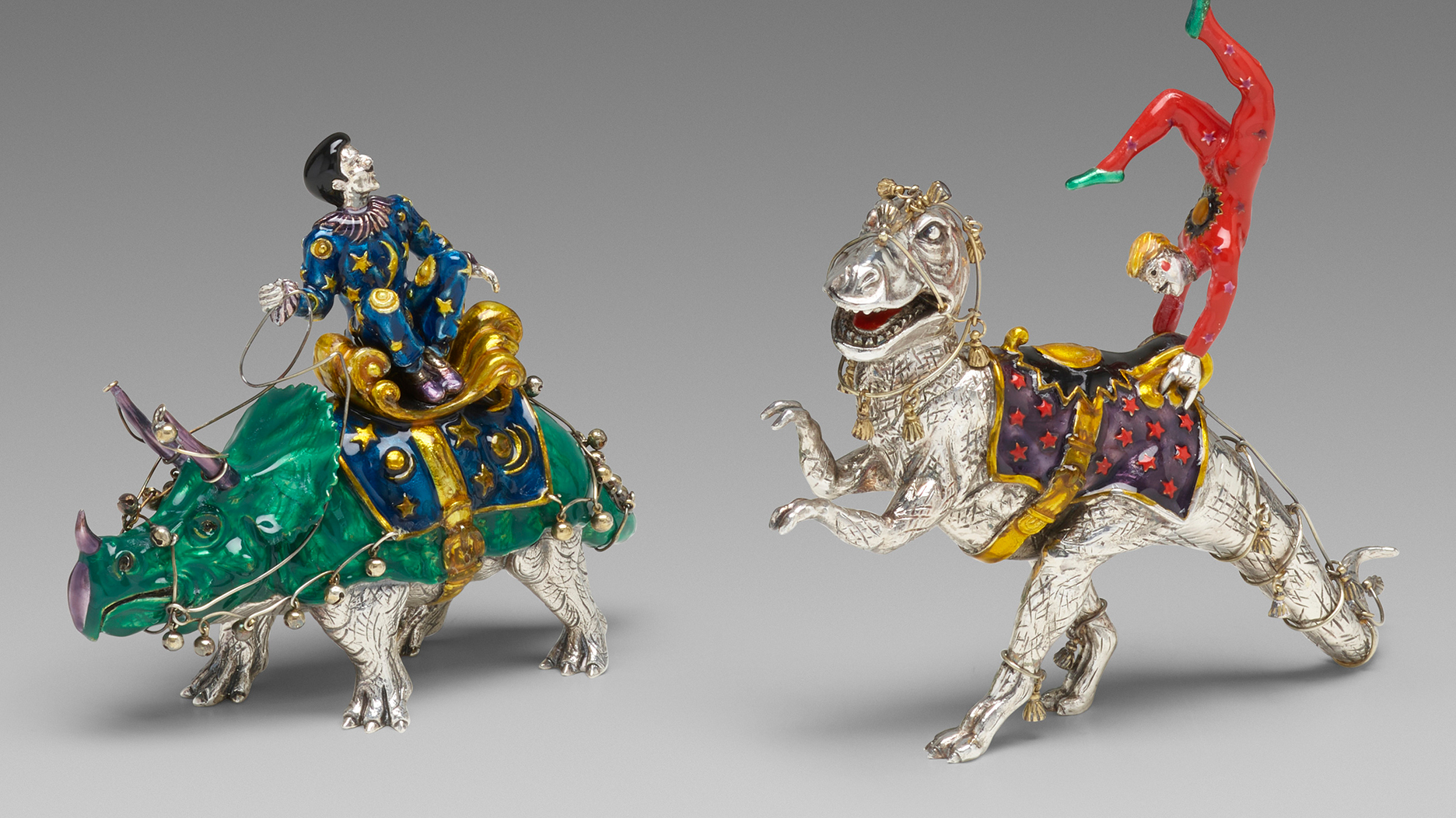
Producer Robert Boyett, whose work includes the hit sitcoms “Full House” and “Family Matters” and Broadway shows “To Kill a Mockingbird” and “Dear Evan Hansen,” collected more than 60 original pieces over decades, and those were the pieces up for auction Wednesday.
“As a predecessor of uniquely American entertainment, the circus and its mythos continue to fascinate today—it is no surprise that Boyett was drawn to Moore’s exquisite homage,” said the auction house in a press release about the auction.
The collection was divided into 12 lots.

Let's Break Some Glass

This morning, as I scrolled through Facebook, Tiffany’s shared a post about a new indie documentary, Crazy about Tiffany's, just released on the history of the store, and more importantly the brand. Facebook totally had me pegged and I quickly brewed a pot of coffee, pulled up Vimeo and rented the movie.
The story behind Tiffany's is inherently interesting from a branding perspective. Everyone recognizes the little blue box; they set the standards for jewelry trends. In 1886 they introduced their version of an engagement ring and from there it became a standard across the globe. Before that, it was a tradition that faded in and out of different cultures throughout time, but once they put their stamp on it, their design was emulated by jewelers all over and the betrothed expected it.
They did a great job with the production of this film; it was informative and visually compelling. They even swiftly interwove great moments from Breakfast at Tiffany's, Sweet Home Alabama, and a few other film clips throughout the piece. There were many interludes of interviews with those who made Tiffany’s what it is today, but of all the inspiring footage, the interview with Gene Moore, the famed window dresser, stuck out the most.
“I’ve been known to break a glass in the window and that was fun because people would call up and say 'You know you’ve got a broken glass in the window?’ and I’d say, ‘Yes, I know, there’s the hammer right beside it that broke it.”- Gene Moore
Gene Moore embraced the theatrical component of window display. He completely changed the way that the prime NYC window real estate was viewed. They note in the film that before him, the goal was to showcase as many items with their price tags proudly on display to bait the passerby to come in. What did Moore do differently? He demanded a conversation.
Much like current trends in Advertising and Marketing today, he focused his audiences’ attention and he tested them for a reaction. He juxtaposed the carefully crafted aesthetics of the jewelry with natural elements and damaged goods (which sometimes was the jewelry itself). This did two things: capture and focus the attention. As humans, we are biologically drawn to what sticks out. By doing something completely different, Moore played “Made you look” with the NYC passerby then baited them in with one perfectly placed product.
“I learned to make a difference because I wanted to see how much attention people payed to it.”- Gene Moore
In a more modern sense, things like broken glass may not catch the bat of a lash, but his principle will always be the same. As creatives, we must always find a way to capture the attention of our audiences. When it comes to brand artwork, the audience may be clearly defined, but over time, it will continue to change and evolve. The most important thing is to keep that conversation going; get them talking. And above all, be ready to liste
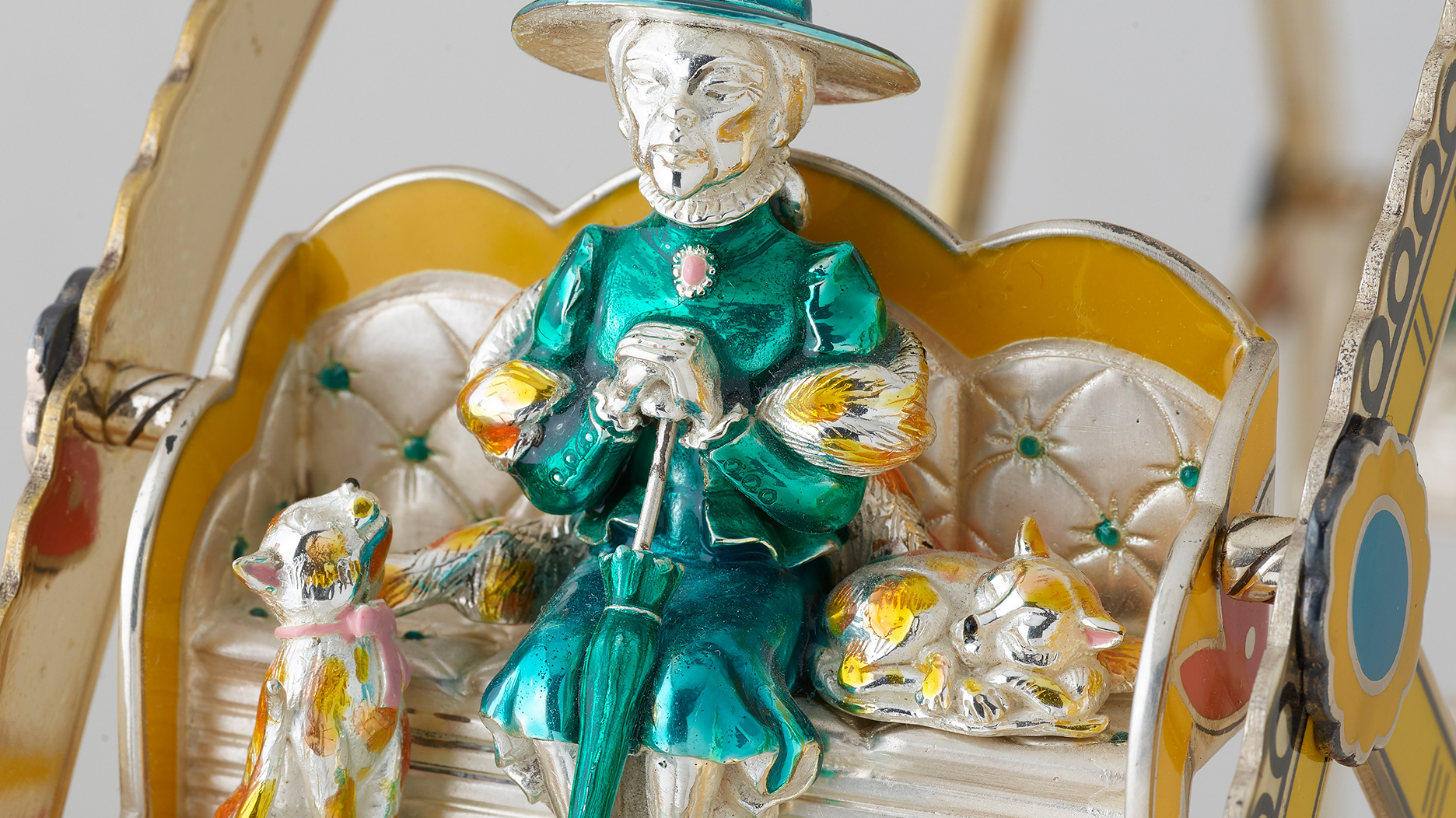
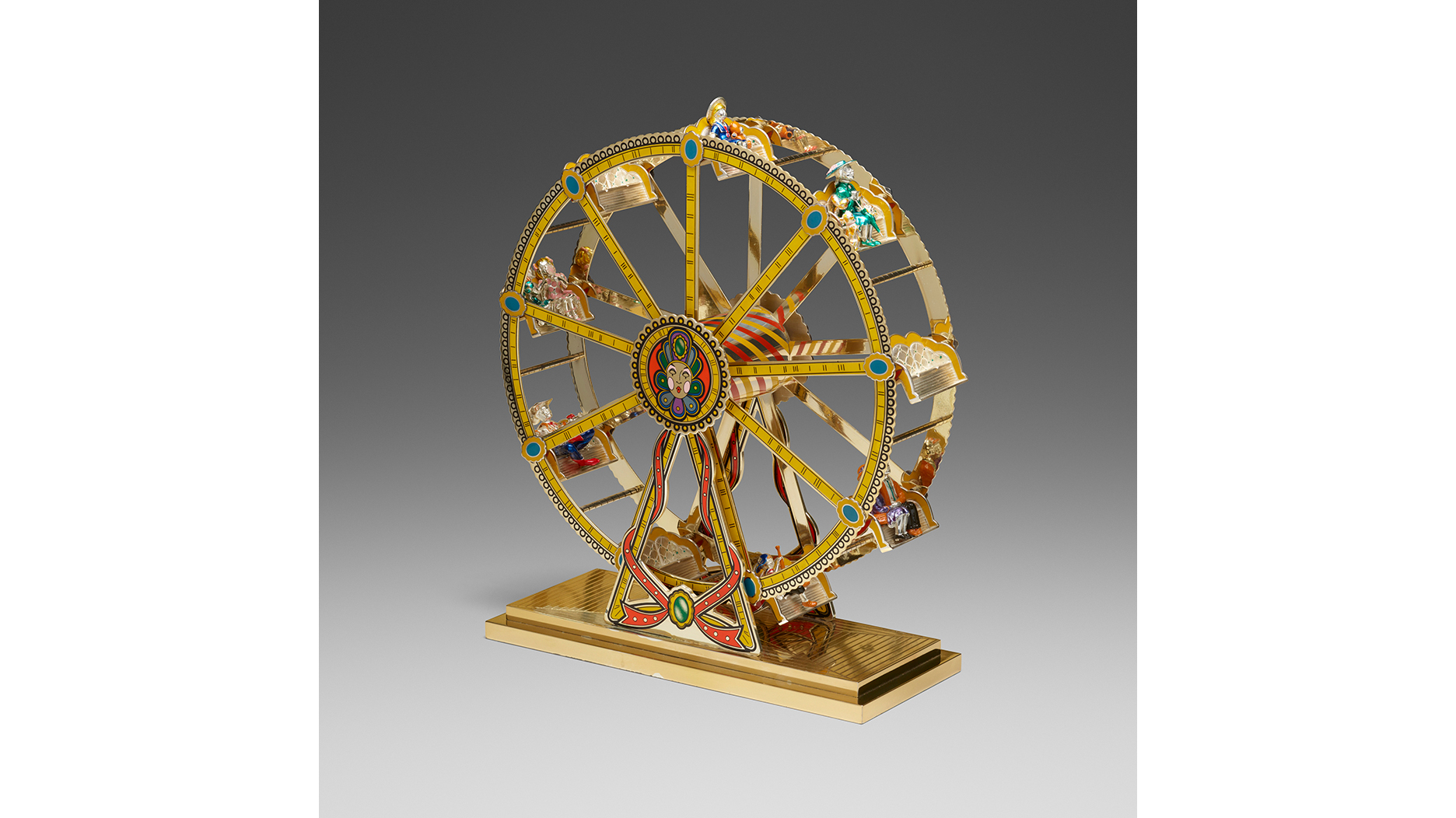
The Tiffany & Co. circus also included a carousel featuring horses, a zebra, a tiger, a camel, a giraffe, and a rabbit, crafted in sterling silver and brightly colored enamel.
When plugged in, the carousel turns and plays music.
The carousel sold for $40,000, within its $30,000 to $50,000 estimate.
In addition, there were several groups of silver and enamel figurines up for auction, including a set of five elephants, seen at the top of the story.
The elephant set features the pachyderms, including four with acrobats on top, and a ringmaster to guide them. It also comes with a copy of Moore’s book.
This set sold for $21,250, well above its $10,000 to $15,000 estimate.
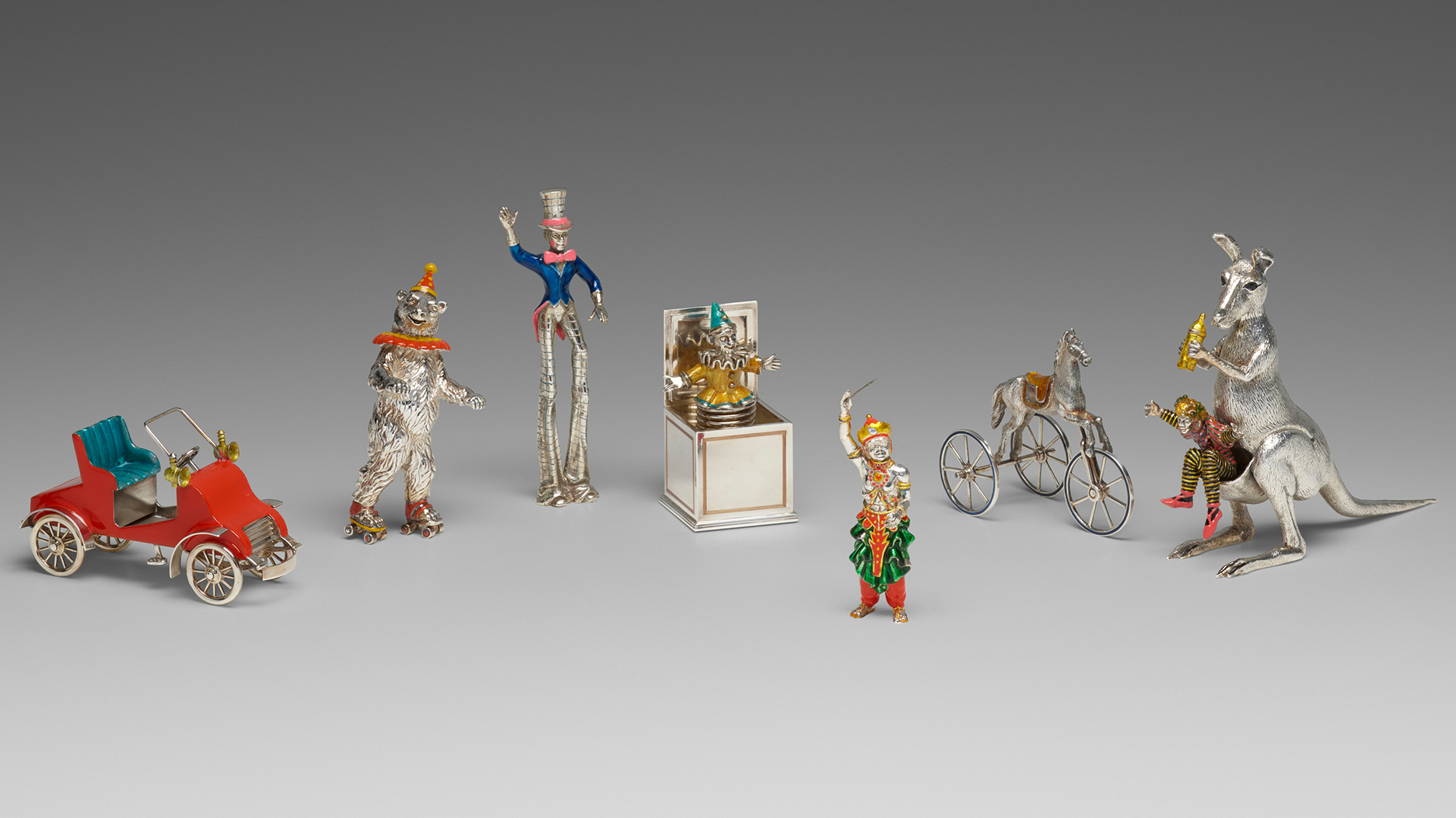
Another set consisted of a kangaroo with a clown in its pouch, a jack-in-the-box, a tall man, a bear on roller skates, a costumed trainer, a toy horse on wheels, and a red clown car.
It sold for $16,250, well above its $8,000 to $12,000 estimate.
All 12 lots sold for within or above auction estimates, bringing in a total of $227,075.
Family members
- Bernard Oppenheimer (1866–1921)
- Ernest Oppenheimer (1880–1957)
- Harry Oppenheimer (1908–2000)
- Mary Slack (born 1943)
- Nicky Oppenheimer (born 1945)
- Frank Leslie Oppenheimer (1910–1935)
- Harry Oppenheimer (1908–2000)
- Otto Oppenheimer (1882–1948)
- Philip Oppenheimer (1911–1995)
- Anthony Oppenheimer (born 1937)


.webp)
Category & Innovation Leader | FMCG & Beauty | GTM Strategy | Brand Building | Innovation | D2C + Retail | Consumer Centric Growth
9yBreaking glass is oblique approach basically to catch market unawares. Its all about coming from a different angle from your competito