NEW YORK ~ DRAPER
FOR EDUCATIONAL PURPOSES
Dr. John William Draper (1811 – 1882)


John William Draper (May 5, 1811 – January 4, 1882) was an English polymath: a scientist, philosopher, physician, chemist, historian and photographer. He is credited with pioneering portrait photography (1839–40) and producing the first detailed photograph of the moon in 1840. He was also the first president of the American Chemical Society (1876–77) and a founder of the New York University School of Medicine.
One of Draper's books, the History of the Conflict between Religion and Science, popularised the conflict thesis proposing intrinsic hostility in the relationship between religion and science. It was widely read and was translated into several languages.
His son, Henry Draper, and his granddaughter, Antonia Maury, were astronomers. His granddaughter, Carlotta Maury (Antonia's younger sister), was a paleontologist. His eldest son, John Christopher Draper, was a chemist; and son Daniel Draper, a meteorologist.
John William Draper was born May 5, 1811, in St. Helens, Lancashire, England, to John Christopher Draper, a Wesleyan clergyman, and Sarah (Ripley) Draper. He also had three sisters, Dorothy Catherine Draper (August 6, 1807 – December 10, 1901),] Elizabeth Johnson, and Sarah Ripley. On June 23, he was baptized by the Wesleyan Methodist minister Jabez Bunting. His father often needed to move the family due to serving various congregations throughout England. John Wm. Draper was home tutored until 1822, when he entered Woodhouse Grove School. He returned to home instruction (1826) prior to entering University College London in 1829. While at University College London, Draper studied chemistry under the direction of Edward Turner (chemist).
On September 13, 1831, John William Draper married Antonia Caetana de Paiva Pereira Gardner (c. 1814–1870), the daughter of Daniel Gardner, a court physician to John VI of Portugal and Charlotte of Spain. Antonia was born in Brazil after the royal family fled Portugal with Napoleon's invasion. There is dispute as to the identity of Antonia's mother. Around 1830, Antonia was sent with her brother Daniel to live with their aunt in London.
Following his father's death in July 1831, John William's mother was urged to move with her children to the US state of Virginia. John William hoped to acquire a teaching position at a local Methodist college.
Genealogy: Antonia Caetana de Paiva Pereira Gardner was born on 30 March 1815 in Santíssimo. Brazil. She was the daughter of Daniel Gardner, court physician to John VI of Portugal and Charlotte of Spain, and Carlota Joaquina de Paiva Pereira.[4] She was baptized on 29 May 1815.
About 1830 she was sent with her brother Daniel to live with an aunt in London.
The family moved to Virginia, United States, in 1831.
She married John William Draper on 13 Sep 1831 in Minster in Sheppey, Kent, England.
Children:
- John Christopher 1835-1885
- Henry 1837-1882
- Virginia 1839-1885
- Daniel 1841-1931
- William 1845-1853
- Antonia Coetana De Paiva Pereira 1849-1923
In 1850 she was living with her husband, six children and five servants in Elmsford, Greenburgh, Westchester, New York. Her husband was a physician and scientist.[9]
In 1870 she was living with her husband, daughter Antonia, and six other people in Greenburgh, Westchester, New York. Her husband was a professor of chemistry.
She died on 31 June 1870 in Hastings-on-Hudson, Westchester, New York, United States.


 Theodore Frelinghuysen, Chancellor of NYU Photographer: Dr. John William Draper
An early daguerreotype of Theodore Frelinghuysen (Chancellor of NYU at the time) was taken by John William Draper around 1839, making it among the first portraits of an American, showcasing his role as a prominent figure in early photography alongside other notable figures like Samuel Morse and Andrew Jackson, with later photographic versions appearing for his political campaigns, such as the 1844 VP run.
John William Draper 1811-1882
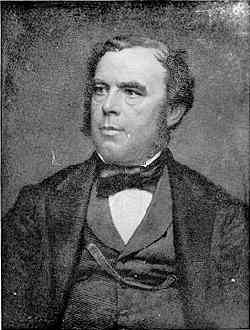 American scientist, historian, and ideologue born near Liverpool, England, on May 5, 1811, the son of a Methodist preacher with a passion for astronomy. Unable to graduate from Oxford or Cambridge due to his religious affiliation, Draper studied chemistry at the newly founded University of London. In 1832, he moved with his family to Virginia, to a Methodist community founded years earlier by relatives in that untouched part of North America. He earned his medical degree from the University of Pennsylvania in 1836 and served as a professor of chemistry at New York University from 1839 until his death on January 4, 1882. Draper's initial fame stemmed from his pioneering role in the early days of photography: he is credited with the first portrait of the human face (that of his sister Katherine, and especially that of his sister Dorothea, June 1840, considered the oldest surviving photographic portrait), the first photographs of the Moon (1839-1840), and the first photographs using a microscope (American literature places Draper's invention of photography in 1837, two years before Daguerre announced his discovery). However, his main contribution to science was his research on radiant energy, based on spectral analyses of incandescent substances, in which his son Henry Draper (1837-1882), a pioneer of astronomical photography and spectroscopy, also collaborated. He wrote several textbooks, which were the most widely used in his time, such as his Human Physiology (1856), enriched with admirable photomicrographs.
 In 1863 he published the History of the Intellectual Development of Europe, a work that was translated into several languages, including Spanish, and in 1867-1870 the three volumes of a History of the American Civil War, a very well-documented work that was well received.
But the book that would make him most famous appeared in 1874: * History of the Conflict Between Religion and Science*, a work that is now considered a classic, in which the positivist scientist joins forces with the Methodist apologist to offer a reductive synthesis, presenting Catholicism as the eternal obstacle to progress. The upheavals caused by the First Vatican Council and the Syllabus of Errors were still fresh, and discussions surrounding Darwinism and positivism were at their peak, so Draper's argument was quickly translated into the major languages, and soon controversies and defenses erupted across the globe. The Catholic side asserted that the dissemination of Draper's book in Europe was sponsored by Bismarck, seeking to weaken the Vatican's Catholic position (using the "reptile fund" of neo-Germanic propaganda that Heinrich Wuttke had been denouncing).
In Spain, Draper's book was translated into two versions in 1876: one in which the translator's name is not indicated, which comes from the French version and was published in the "Contemporary Library" under the title The Conflicts Between Science and Religion, and another, under the title History of the Conflicts Between Religion and Science, translated directly from English by Augusto T. Arcimís and prefaced by none other than Nicolás Salmerón, former president of the Spanish Republic, from his exile in Paris, recently removed from the chair of Metaphysics at the University of Madrid as a consequence of the first fervor of the Bourbon restoration.
Since 1973, the archives of the family of John William Draper have been available at the Library of Congress in Washington, a total of 16,100 documents in 46 filing cabinets, containing correspondence, family documents, manuscripts and drafts of texts, speeches and books, etc.
Selected bibliography of Juan Guillermo Draper in English and other languages
The concluding lecture on the theory and phenomena of heat, JW Bell, New York 1841, 16 pages.
A treatise on the forces which produce the organization of plants, with an appendix containing several memoirs on capillary attraction, electricity, and the chemical action of light, Harper & Brothers, New York 1844. XVI, 108, 216 pages.
An introductory lecture on phosphorus, Jennings, New York 1847, 14 pp.
An introductory lecture on oxygen gas, delivered in the University of New York session MDCCCXLVIII-IX, Jennings, New York 1848, 15 pages.
Human physiology, statistical and dynamical, Harper & Brothers, New York 1856, 649 pages.
A textbook on chemistry. For the use of schools and colleges, 3rd ed. Harper & Brothers, New York 1847, XI+408 pp. 6th ed. Harper & Brothers, New York 1851. New edition: Harper & Brothers, New York 1853, XI+412 pp.
A text-book on natural philosophy: for the use of schools and colleges, containing the most recent discoveries and facts compiled from the best authorities, with nearly four hundred illustrations. Harper & Brothers, New York 1847, VIII+381 pages. 3rd ed.: Harper & Brothers, New York 1848, 1867, 1869, &c.
History of the Intellectual Development of Europe, 1863, 5th ed. Harper & Brothers, New York 1869, 631 pp. Revised edition, Harper & Brothers, New York 1876, 2 vols. Bell & Sons, London 1896. New York 1904, 2 vols.
The historical influence of the medieval profession, Baillière Brothers..., New York 1863, 32 pages.
Thoughts on the Future Civil Policy of America, Harper, New York 1865, 325 pp. 2nd ed.: Harper & Brothers, New York 1866. 3rd ed.: Harper & Brothers, New York 1868. 4th ed.: Harper & Brothers, New York 1871. A facsimile of the 1865 edition exists from Garland Pub., New York 1974 – together with George Frederick Barker (1835-1910), Memoir of John William Draper (1886) – with an introduction by Michael Hudson.
A text-book on physiology... Being an abridgment of the author's larger work on human physiology, illustrated with about 150 wood engravings, Harper & brothers, New York 1866, IV+376 pages.
History of the American Civil War [1861-1865], Harper, New York, 1867-1870, 3 vols. Harper & Brothers, New York 1896, 3 vols. &c.
History of the conflict between religion and science, D. Appleton & Company [The International Scientific Series, vol. XII], New York 1874, XXII+373 pages. [facsimile edition of the first edition 1875? by Gregg International Publishers, 1970]; 3rd ed.: 1875; 4th ed.: 1875; 5th ed.: 1875; 1887; 8th ed.: 1882; 1883; 1893; 1895; 1896; 1897; 1898; 1899; 1904; 1925; 1926 (Vanguard Press); 1928; &c. Kegan Paul & Trench [The International Scientific Series, vol. XIII] London 1875 (3 editions); 10th ed.: 1877; 11th ed.: 1878; 19th ed.: 1885; 20th ed.: 1887; 1901; 34th ed.: 1904 (Kegan Paul, Trench & Trübner); 1927 (with introduction and notes by Robert Arch, Watts & Co., London 1927, XXIV+312 pages); &c. Les Conflicts de la science et de la religion, Librairie Germer Baillière [Bibliothèque Scientifique Internationale, vol. XI], Paris 1875, XII-265 pages; 2nd ed.: 1875; 3rd ed.: 1876; 4th: 1877; 6th: 1879; 8th: 1888 F. Alcan [Bibliothèque Scientifique Internationale, vol. 11]; 11th: 1903 (Germer Baillière). Geschichte der Conflicte zwischen Religion und Wissenschaft, Brockhaus [Internationale Wissenschaftliche Bibliothek, Bd. 13], Leipzig 1875, XXIV+383 pp. Istoriia otnoshen ii mezhdu katolitsizmom i naukoi, Moscow 1876, XIII+353 pp.
Science in America. Inaugural address of Dr. John W. Draper, as president of the American Chemical Society, Delivered in New York, November 16, 1876, JF Trow & Son Printers, New York 1876, 22 pages.
Scientific memoirs, being experimental contributions to a knowledge of radiant energy, Harper & Brothers, New York 1878, [23]+473 pp. Facsimile by Arno Press, New York 1973.
https://filosofia.org/ave/001/a029.htm
____________________
Genealogy __
Dr John William Draper
1811 – 1882 Green-Wood Cemetery


- Birth
- St Helens, Metropolitan Borough of St Helens, Merseyside, England
- Death
- 4 Jan 1882 (aged 70)Hastings-on-Hudson, Westchester County, New York, USA
- Burial
- Greenwood Heights, Kings County, New York, USAShow Map
- Plot
- Sec 73 Lot 968
- Memorial ID
- View Source
John William Draper was educated at Woodhouse Grove School in Leeds and later admitted into the University College London. After immigrating to the United …
Family Members


https://www.lindahall.org/about/news/scientist-of-the-day/john-william-draper/
Find a Grave: https://www.findagrave.com/memorial/40276154/john_william-draper

.webp)
Comments
Post a Comment